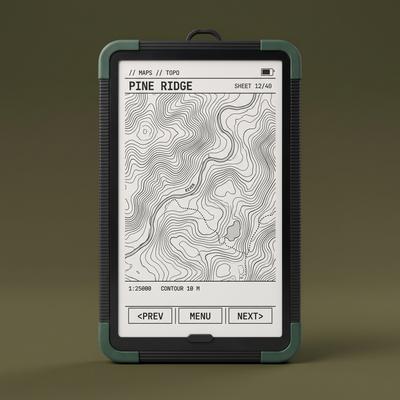
An offline library is simply the information you would want in an emergency, kept somewhere that still works when the internet and the power do not.
Start with what keeps people alive
The first shelf is first aid, safe water, safe food, staying warm and staying cool. Good free starting points are the guides from Ready.gov, the CDC and the National Weather Service. Our Library page lists the official ones by topic.
Add what fits where you live
Hurricane country needs flood and storm guides. Cold regions need winter weather and hypothermia. Wildfire areas need evacuation and smoke guides. Add local maps of roads and trails too.
Keep it where you can read it
A folder of downloads on a laptop does not help if the laptop is dead. Print the few pages you would need in the first hour, such as your family plan and emergency numbers. Then keep the deeper reference on something that lasts through a long outage.
Check it twice a year
When you change your clocks, test your batteries, swap old water and look over your library. Advice and phone numbers change over time.
Sources: Ready.gov, CDC and National Weather Service guidance. This is general reference information, not a substitute for professional medical care or emergency services.